Desert Safari Photography: 12 Tips for Stunning Dune Photos
Phone and camera tips for golden hour, dune bashing action, camel silhouettes, portraits and night skies in the Dubai desert, plus how to protect your gear from
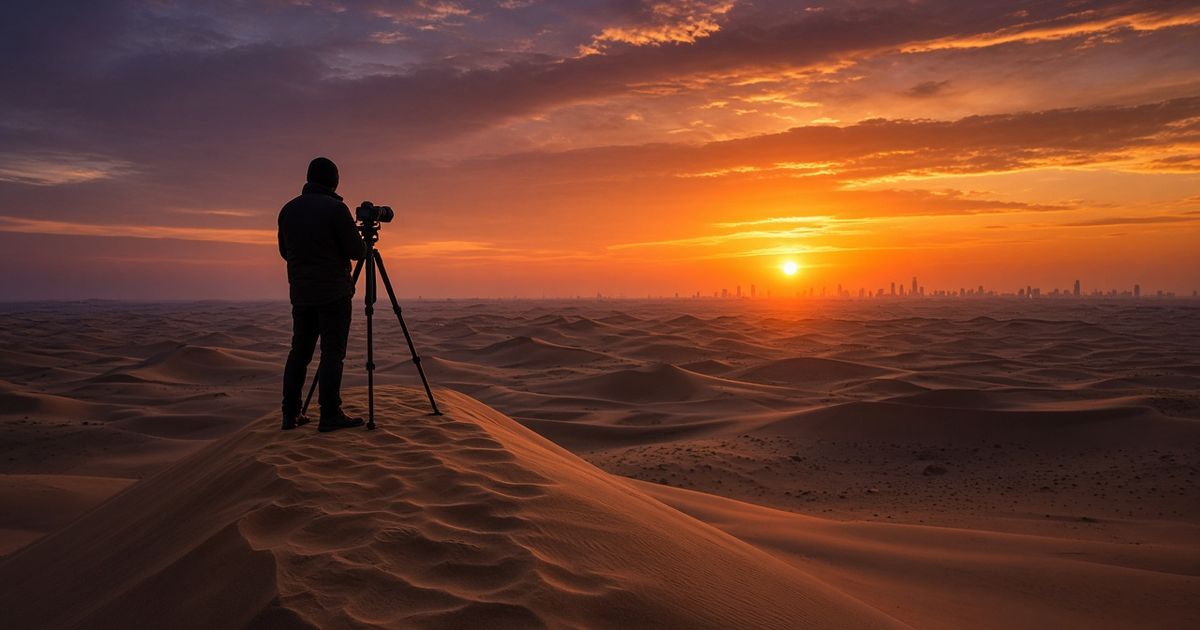
The desert is one of the most photogenic places in the UAE. It has endless curves, rippled textures, glowing sunsets and skies full of stars. It's also a tricky place to shoot: bright sand fools your camera's meter, wind carries dust, and everything changes quickly as the sun drops. These twelve tips, for phones and cameras alike, will help you come home with photos worth printing.
Light is everything
1. Shoot golden hour
The hour before sunset is the reason evening safaris are so popular with photographers. Low, warm light rakes across the dunes, creating long shadows and showing every ripple. Midday light, by contrast, flattens the sand into a bright, featureless surface. If you choose a morning safari, the hour after sunrise offers similar magic with cooler tones.
2. Turn around
Everyone points their camera at the sun. Turn 180 degrees and you'll often see the sky glowing pink and purple, with dunes lit in soft, even light. Some of the best sunset photos don't include the sun at all.
3. Expose for the highlights
Bright sand and sky can trick your camera into overexposing. On a phone, tap the brightest part of the scene and slide exposure down slightly. On a camera, try minus a third to minus two-thirds of a stop of exposure compensation. Richer colours and detail in the sky are worth slightly darker shadows.
Composition
4. Use dune ridges as leading lines
The sharp crest of a dune is a natural line that leads the eye through your frame. Position yourself so the ridge runs diagonally from a corner towards your subject or the horizon.
5. Add a person for scale
Endless sand can look abstract in photos. A person walking along a ridge, or standing small against a huge dune, instantly gives a sense of scale and story. Ask your companion to wear a bright colour: red, orange or white pops against the sand.
6. Silhouette camels against the sky
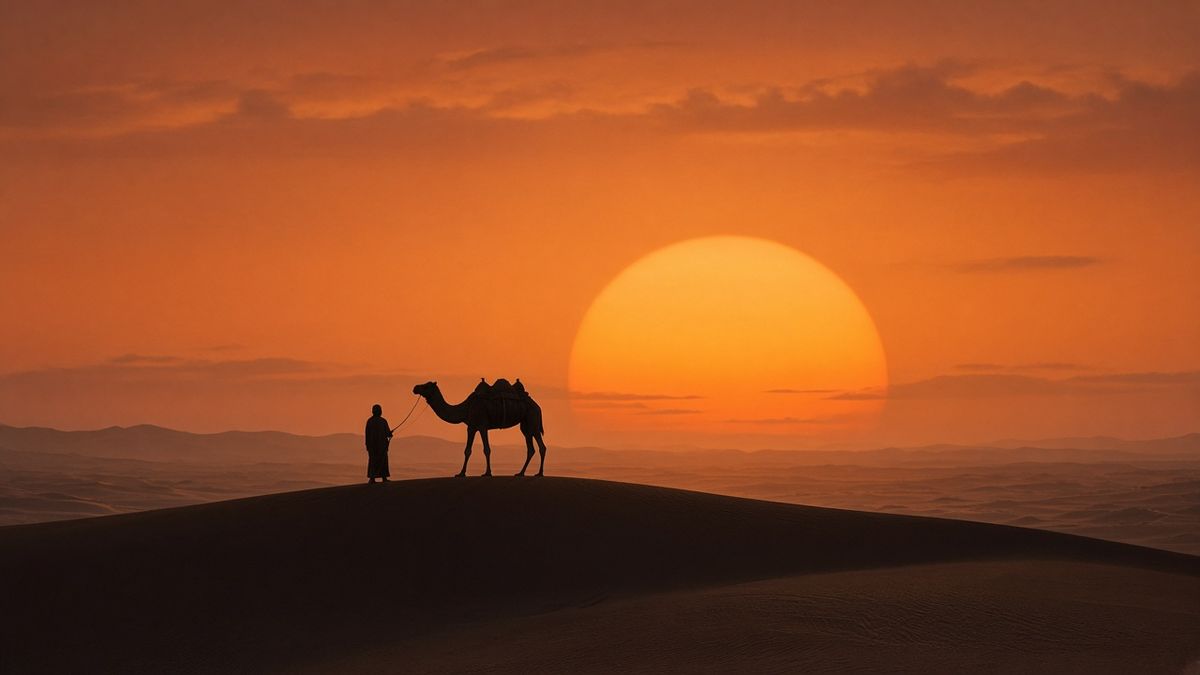
Camels have an iconic shape. Position them between you and the setting sun, expose for the bright sky, and they'll turn into crisp silhouettes. Ask the handler first, and give the animals space. For a sunset camel ride plus dark-sky time, see this evening safari with camel ride and stargazing.
7. Get low for texture
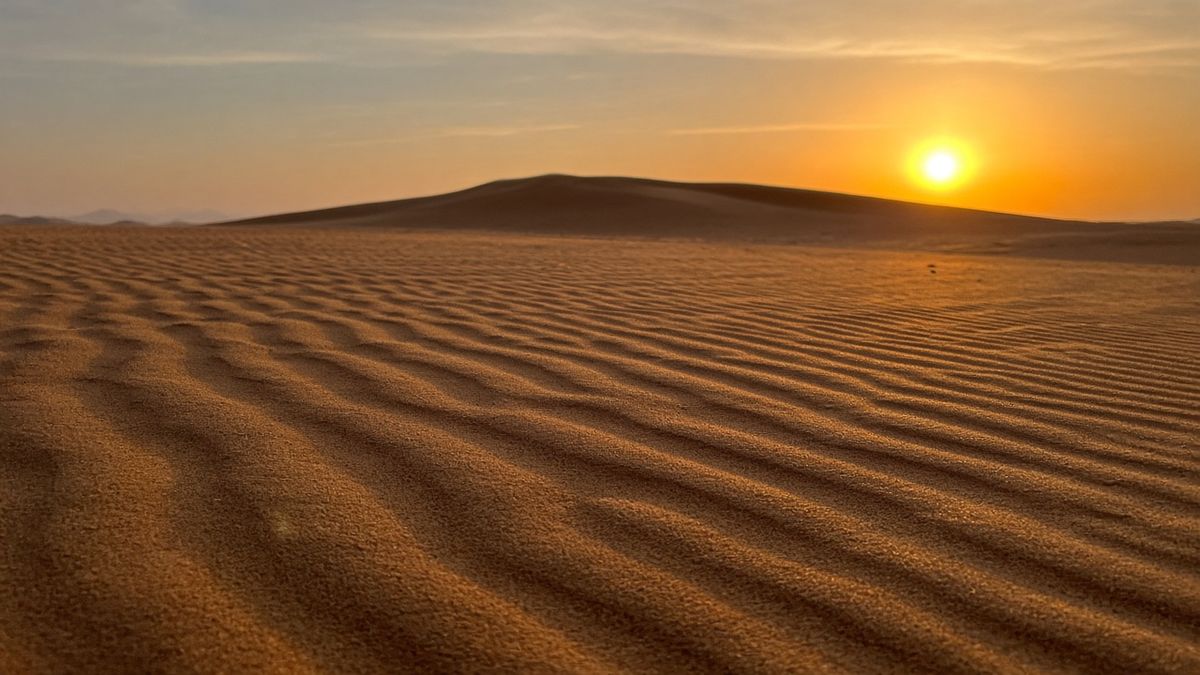
Crouch down and put wind ripples or footprints in the foreground, with dunes and sky behind. On a phone, the wide or ultra-wide lens exaggerates this depth beautifully.
Action and adventure
8. Use video during dune bashing
Inside a moving 4x4, stills are hard to get sharp. Record video instead, holding the phone firmly with both hands and keeping your seatbelt on. Later you can pull frames from the clip or share the video as it is. Clean the window first, or shoot through an open window only if the driver says it's safe.
9. Use burst mode for sandboarding and quad bikes
Fast action needs fast shutter speeds and many frames. Use burst mode on a phone or continuous shooting on a camera, and pre-focus on the spot where the action will happen.
Night photography
10. Use night mode, and stay still
Modern phone night modes can capture impressive starry skies. Rest the phone on something stable, such as a bag or the sand, and stay perfectly still during the exposure. Use the timer to avoid shake when you tap the shutter.
11. Find darkness
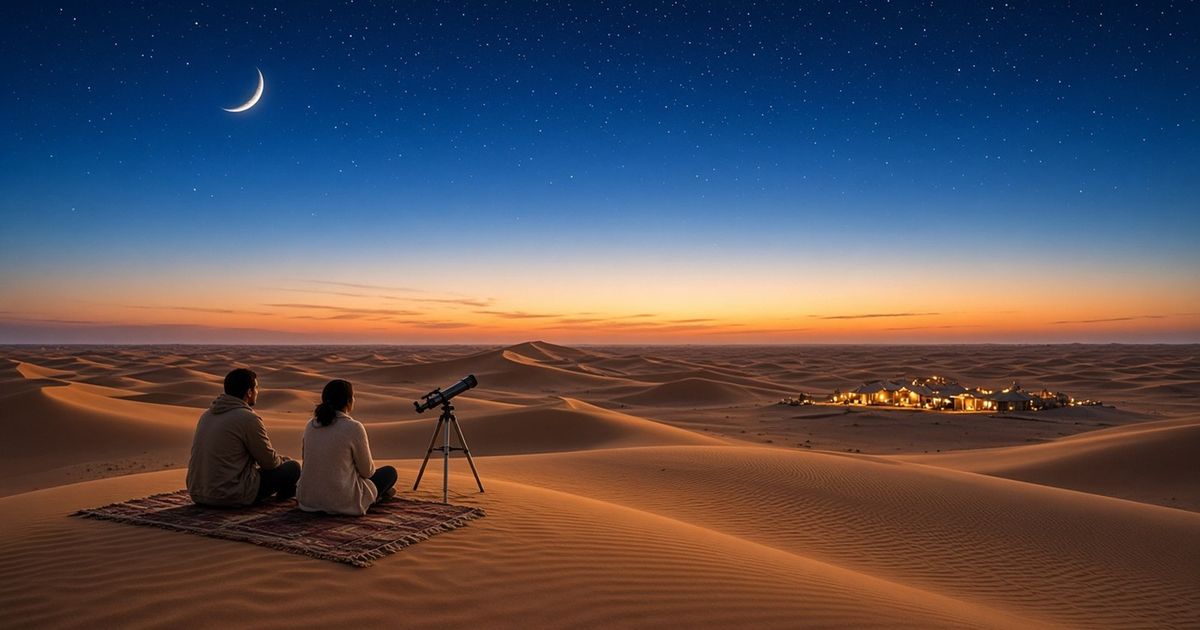
Walk a short, safe distance from the camp lights, with permission and a torch, and let your eyes adjust. A moonless night gives the best chance of seeing the Milky Way. Camp lights can also work for you: a glowing tent under a starry sky is a classic shot. Overnight trips give you the most time for this. See our overnight safari guide.
For camera users, a typical starting point for stars is a wide-angle lens at its widest aperture, a high ISO, and an exposure of around 15 to 20 seconds on a tripod. Adjust to your gear and conditions.
Protecting your gear
12. Treat sand like water
Fine desert sand gets everywhere and can damage zoom mechanisms, buttons and sensors.
- Keep phones and cameras in zip bags when you're not shooting.
- Don't change lenses outdoors, especially in wind. Choose one versatile lens for the trip.
- Use a lens hood and keep a lens cap handy.
- Clean with a blower, never by wiping, which can scratch.
- Wipe the outside of your phone with a soft cloth before putting it back in your pocket.
Phone vs camera: which should you bring?
| Phone | Camera | |
|---|---|---|
| Convenience | Always with you | Extra bag and care needed |
| Golden hour | Excellent | Excellent, with more control |
| Action | Good with burst or video | Better with fast autofocus |
| Night sky | Good with night mode | Better with tripod and wide lens |
| Sand risk | Lower with a zip bag | Higher; avoid lens changes |
People and etiquette
Always ask before photographing people, including camp staff, performers and other guests. In the UAE, photographing or sharing images of identifiable people without consent can be a legal issue. Most people are happy to help if you ask politely. Performers at camp are often fine with photos during shows, but avoid using flash in their faces.
A simple shot list
- Convoy of 4x4s on a ridge
- Sand spraying during dune bashing (video)
- Wide golden-hour landscape with dune ridges
- Person on a ridge for scale
- Camel silhouettes at sunset
- Low-angle sand ripples
- Sandboarding action (burst)
- Lantern-lit camp at blue hour
- Starry sky over a tent (night mode)
- Sunrise over dunes (overnight safaris)
Editing tips
Keep edits natural. Lift shadows slightly, add a touch of warmth, and avoid pushing saturation so far that the sand turns neon. Straighten horizons, crop for strong lines, and you're done.
Recommended camera settings at a glance
| Scene | Phone | Camera starting point |
|---|---|---|
| Golden-hour landscape | Main lens, exposure slightly down | Aperture f/8, ISO 100, adjust shutter |
| Dune bashing | 4K video, hold firmly | Shutter 1/1000 s or faster |
| Sandboarding / quads | Burst mode | Continuous AF, 1/1000 s, burst |
| Camel silhouettes | Tap the sky to set exposure | Expose for the sky, f/8 |
| Blue hour at camp | Night mode, steady surface | Tripod, ISO 400–800, 1–4 s |
| Stars | Night mode, timer, rest on sand | Wide lens, widest aperture, ISO 3200, 15–20 s |
These are starting points, not rules. Check your screen, adjust and shoot again. In the desert the light changes fast, so take more frames than you think you need.
Final thoughts
You don't need expensive gear to take beautiful desert photos, just good light, a few composition tricks and some care for your equipment. Ask your guide for a photo stop at a good viewpoint: our drivers know the dunes well. Choose an evening or overnight safari, and the desert will give you a sunset to remember, in pixels and in memory.
Prefer instant online booking?
Book on GetYourGuide
Hand-picked tours with free cancellation options and verified reviews.
- Evening Desert Safari with Camel Ride & StargazingCheck availability →
- Overnight Desert Safari with Sunrise Balloon RideCheck availability →
- Sunrise Hot Air Balloon Flight with Camel Ride & BreakfastCheck availability →
Disclosure: some links on this page are GetYourGuide affiliate links. If you book through them we may earn a small commission at no extra cost to you.
Frequently asked questions
Can I take photos during dune bashing?
Keep your seatbelt on and hold your phone firmly with both hands. Video usually works better than stills while the car is moving, and you can grab frames from it later.
How do I protect my camera from sand?
Avoid changing lenses outdoors, especially in wind. Keep gear in a zip bag or dust cover when you're not shooting, and clean with a blower. Never wipe sand off a lens, because it can scratch.
Can I fly a drone in the desert?
Drone use in the UAE is regulated and generally requires registration and permission. Rules change, so check the current regulations before bringing one, and never fly near people or camps without approval.
What's the best time for desert photos?
The hour before sunset and the hour after sunrise. The light is warm and low, and dunes show strong shadows and texture.
Do I need a professional camera?
No. Modern phones take excellent desert photos, especially at golden hour and in night mode. A camera with interchangeable lenses gives more control, but technique matters more than equipment.
Can I photograph people at the camp?
Always ask first. In the UAE, photographing people without their consent can be a legal issue, and sharing such images online without permission is not allowed. Most staff are happy to help if you ask politely.
Explore Dubai Desert Team
Local desert guides and safari planners based in Dubai. We write what we tell our own guests — no fluff. About the journal.
Related stories
Experiences
Stargazing in the Dubai Desert: Best Spots, Dates & Tips
Plan stargazing in the Dubai desert: the darkest spots near Dubai, Milky Way season, 2026-27 meteor shower and new moon dates, guided tours and what to pack.
22 Oct 2026 · 10 min read
Experiences
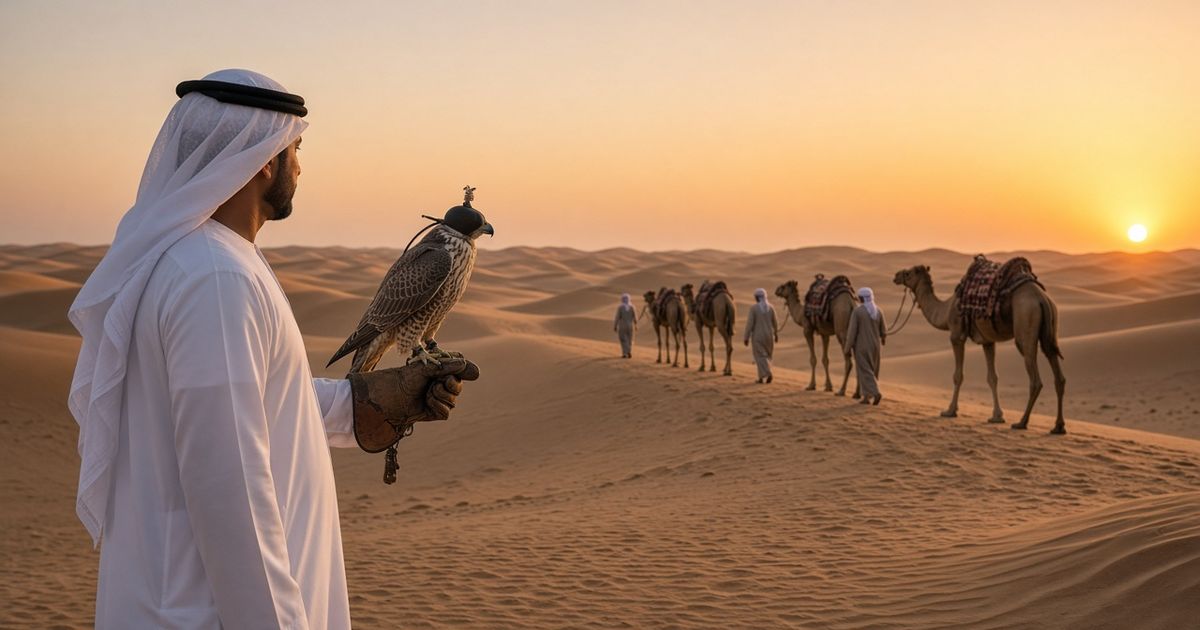
Camel Rides & Falconry in Dubai: A Guide to Two Desert Traditions
What to expect from a camel ride and falconry experience in Dubai: how camel rides work, falcon facts, etiquette, animal welfare tips and how to book.
20 Oct 2026 · 5 min read
Experiences
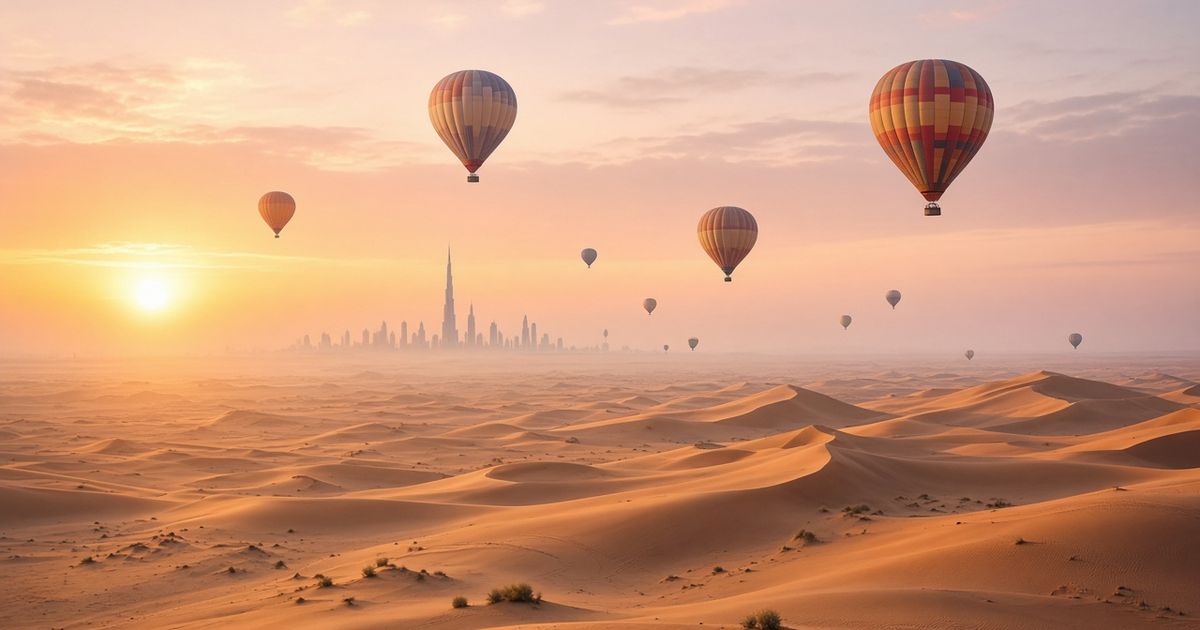
Hot Air Balloon Dubai: A Sunrise Flight Over the Desert
Planning a hot air balloon ride in Dubai? Flight times, what happens on the day, age and health rules, season, what to wear and how to choose a balloon package.
20 Oct 2026 · 5 min read